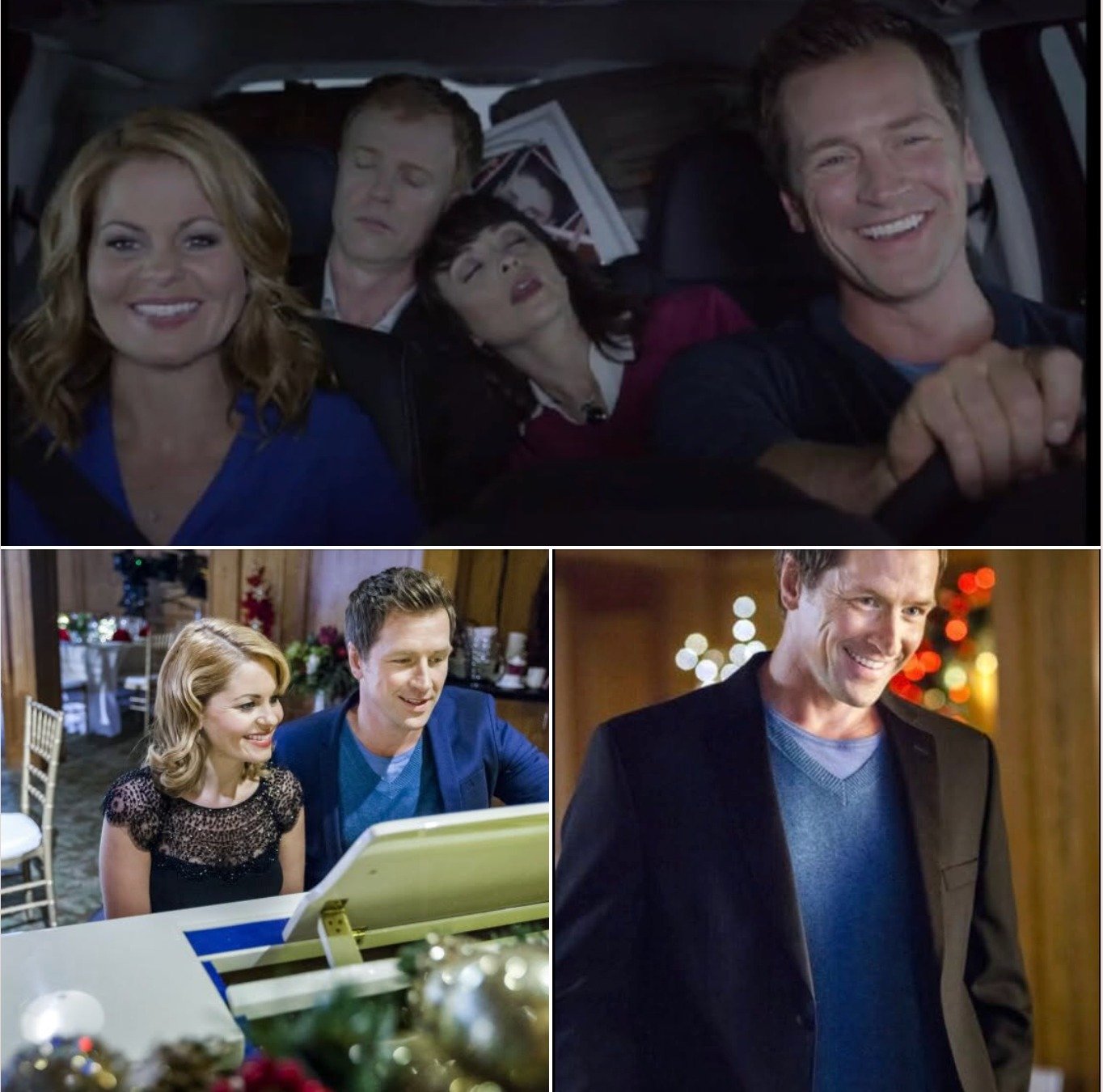
Part Three: Why the Detour Still Feels Like the Point
Perhaps the most satisfying way to rewatch A Christmas Detour is to stop thinking of it as a movie about getting somewhere and start thinking of it as a movie about realizing when you should change direction.
Paige begins with a very specific idea of what her future should look like. Her plans are tied to romance, marriage and the life she believes she has chosen. But the unexpected journey gives her something that a perfectly organized trip never could have given her: perspective.
That is the emotional “switch” at the heart of the story.
The switch is not simply from one romantic partner to another. It is the shift from living according to a carefully constructed idea of happiness to becoming open to happiness when it arrives in an unexpected form. That distinction makes the movie more relatable than its snowy Christmas setting might suggest.
Many people know what it feels like to have a picture of how life is supposed to unfold. A relationship should look a certain way. A career should follow a certain path. A holiday should go according to schedule. A future should make sense on paper.
Then something happens.
A plan falls apart. A door closes. A trip changes direction. And suddenly, the thing that felt like an inconvenience becomes the moment that forces you to see your life differently.
That is why the movie’s central idea continues to work. Its message is hopeful without requiring everything to go perfectly. In fact, the story needs things to go wrong before the characters can understand what they truly want.
The film also benefits from the performances of its ensemble cast. Sarah Strange plays Maxine, David James Lewis plays Frank, and the cast includes Barbara Niven and Marcus Rosner in supporting roles. Ron Oliver directed the movie, with Mark Amato credited as screenwriter. Their presence helps the story feel like more than a simple two-person romance, giving the journey different perspectives on commitment, disappointment and companionship.
And then there is nostalgia.
For longtime Hallmark viewers, A Christmas Detour belongs to a period of holiday movies that remain easy to return to because they are built around comfort rather than spectacle. There is something reassuring about seeing familiar Christmas imagery, familiar emotional rhythms and actors who understand exactly how to make a quiet moment feel meaningful.
The movie does not need to reinvent Christmas to make viewers feel something. It simply reminds them that love can arrive when circumstances are inconvenient, that plans can be wrong even when they seem perfect, and that a change in direction is not always a failure.
Sometimes it is the beginning.
That may be the reason a movie like A Christmas Detour can become more enjoyable with each rewatch. The first time, viewers may watch for the romance and the holiday atmosphere. Later, they may notice the deeper idea: Paige does not simply find a different path. She learns to recognize that the path she wanted was not necessarily the life she needed.
And perhaps that is the little piece of Christmas magic fans keep coming back for.
Not the promise that everything will happen exactly as planned, but the hope that when life takes an unexpected turn, something beautiful might be waiting around the corner.
Sometimes the detour is not taking you away from your life.
Sometimes it is finally taking you toward it.
