Part Two: Debbie Gibson and Robert Gant Give the Romance Its Heart
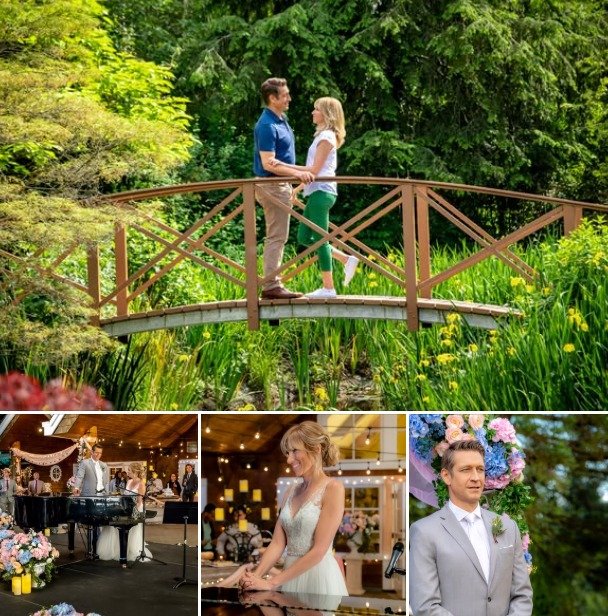
At the center of the movie are Debbie Gibson and Robert Gant, whose performances give Debbie and Noah a warmth that helps the relationship feel established rather than manufactured.
That distinction matters. This is not a story about two strangers meeting for the first time and instantly falling in love. Their relationship already has history, affection, and emotional investment behind it. By the time Wedding of Dreams begins, the audience understands that they have already found something meaningful together. The challenge is figuring out how to protect it while life continues to change around them.
Gant’s Noah is particularly important because he is not simply there to serve as the perfect romantic partner. He has his own feelings about Debbie’s changing priorities. As her music career begins pulling her back toward the spotlight, Noah has to wonder where he fits into the future she is imagining.
The official production synopsis makes that conflict clear: Debbie is encouraged to return to performing while also trying to prepare for her wedding, and Noah eventually asks whether her heart is still with him or with her music.
That emotional question gives their romance substance.
Gibson also brings a natural connection to the character because music has been such a defining part of her own career. Hallmark notes that Gibson entered the music business at 16 and became known for writing, producing, and performing her own No. 1 hit, “Foolish Beat.” Her career has also included extensive musical-theater work, making Debbie’s complicated relationship with performing feel especially fitting for the actress portraying her.
There is something satisfying about watching an entertainer play a character who has to decide what success means on her own terms.
The movie also benefits from Pascale Hutton as Denise, bringing family into the emotional landscape. The story does not treat romance as something that exists in isolation. Debbie’s relationship with her sister and niece, her connection with her students, and her bond with Noah all contribute to the sense that she is building a life rather than simply planning a wedding.
That larger sense of community is one of Hallmark’s enduring strengths.
The wedding itself becomes a symbol of that community. It represents not only two people promising themselves to each other, but also the people and experiences that helped them arrive at that moment. Gant once described his favorite part of a wedding as seeing people from different parts of a couple’s lives come together to support them, calling that gathering a beautiful tapestry of lives joining for the couple’s next chapter.
It is easy to see why that sentiment fits the spirit of this movie so well.
