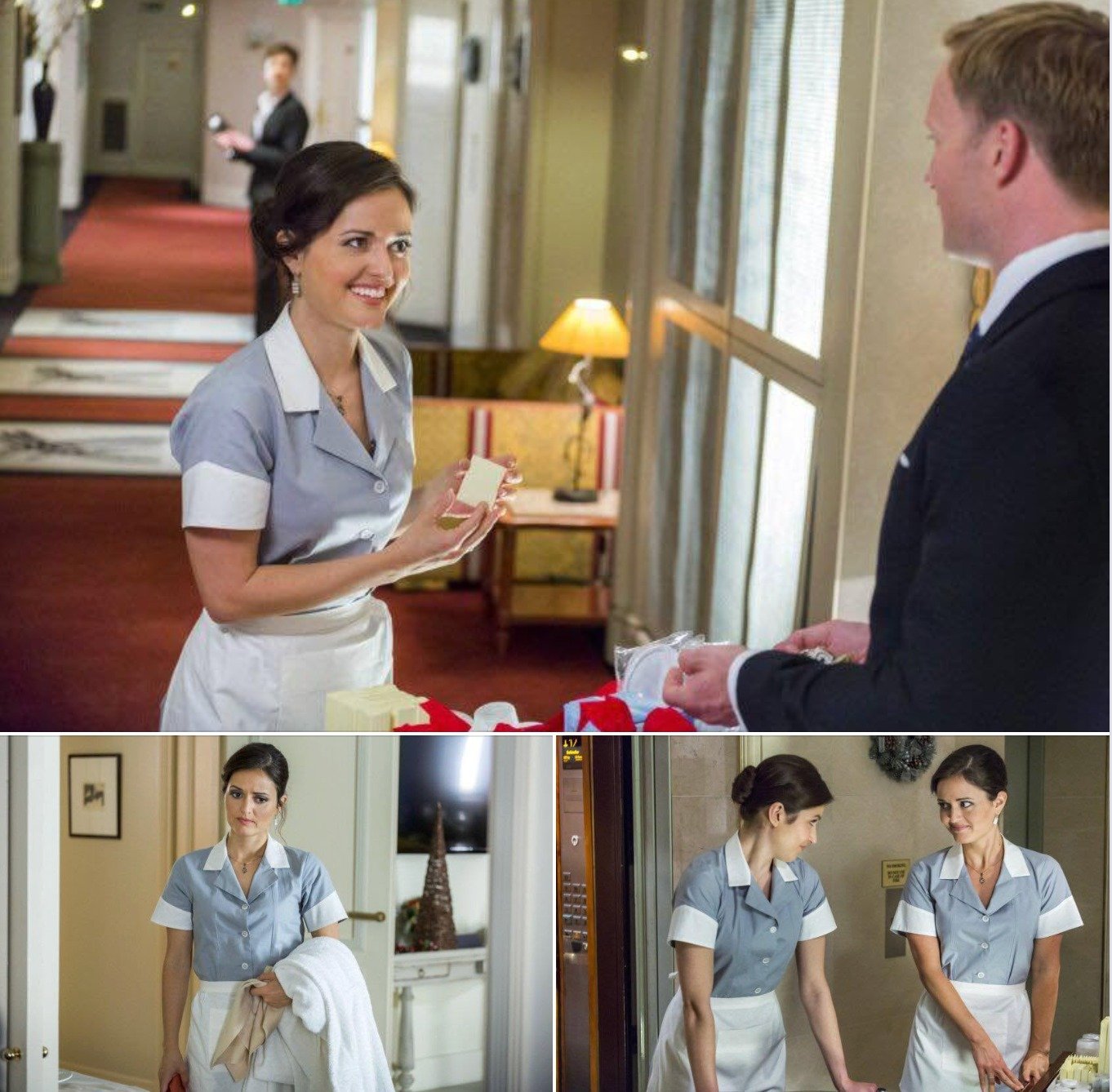
Part Three: The Reason Fans Keep Coming Back
There are plenty of Christmas romances that are enjoyable once and then forgotten. Crown for Christmas has a different quality. It belongs to that comforting category of holiday movies that viewers can return to simply because they know how it feels.
Part of that comes from the fantasy. There is something irresistible about an ordinary woman entering a royal world at Christmastime. But the deeper reason is that Allie’s story is not really about becoming a princess or living in a castle. It is about being valued for who she already is.
That distinction makes the movie especially satisfying. Allie does not need to transform herself into someone worthy of Max. Her kindness, resilience and ability to connect with Theodora are precisely what make her important. The fantasy works because it rewards qualities that have nothing to do with wealth or rank.
The movie also understands the emotional power of second chances. Allie begins the story after a professional disappointment, while Max is living with responsibilities and emotional complications of his own. Neither character is exactly where they expected to be. Their meeting creates the possibility of starting again.
That theme is one reason the film fits so naturally into the Christmas tradition. Holiday stories frequently ask viewers to believe that people can make different choices, repair relationships and find hope in unexpected places. Crown for Christmas takes that idea and wraps it in a romantic fairy tale without losing its emotional simplicity.
The final romantic choice carries that message clearly. Rather than allowing duty and expectation to determine the future, Max chooses to follow his feelings for Allie. The decision also matters to Theodora, who has found someone who understands her and brings warmth back into her father’s life. The ending therefore feels less like a conventional romantic reward and more like the creation of a new family.
That may be the secret behind the movie’s rewatchability. Viewers are not only watching to see whether two people fall in love. They are returning for the feeling of possibility—the idea that one unexpected opportunity can completely redirect a person’s life.
And then there is the nostalgia. For fans who discovered the movie during the early years of Hallmark’s modern Christmas-movie boom, Crown for Christmas carries the atmosphere of that era: snowy romance, elegant settings, gentle humor, family themes and a happy ending that feels reassuring rather than complicated.
Hallmark continues to feature the movie in its catalog, where it remains categorized as a holiday romance and romantic comedy starring McKellar and Penry-Jones. That continued availability says something about the enduring appeal of this kind of story. Sometimes viewers do not want a complicated holiday experience. They want warmth. They want romance. They want to believe that love can arrive when life seems to be going in the wrong direction.
That is what Crown for Christmas offers. It takes a simple wish—the hope that Christmas might bring an unexpected miracle—and turns it into a story about belonging, family and choosing happiness.
And honestly, that may be why fans can start it intending to watch only one scene and somehow find themselves watching the whole thing again. The movie knows exactly what kind of Christmas magic its audience came looking for, and it delivers it with a smile.
