Part Three: Why the Biltmore Setting Makes the Movie Feel Like a Christmas Dream
If the actors provide the emotional heart of A Biltmore Christmas, Biltmore Estate provides much of its visual magic.
The movie was filmed at Biltmore in Asheville, North Carolina, using numerous locations throughout the historic estate. According to Biltmore’s own behind-the-scenes account, filming took place across areas including the Gardens, Conservatory, The Inn on Biltmore Estate, and nine rooms inside Biltmore House. The production also used vintage cars, artificial snow, period costumes, and hundreds of local extras to help create its 1940s atmosphere.
That attention to visual detail matters because the setting never feels like a random backdrop. Biltmore becomes part of the story itself.
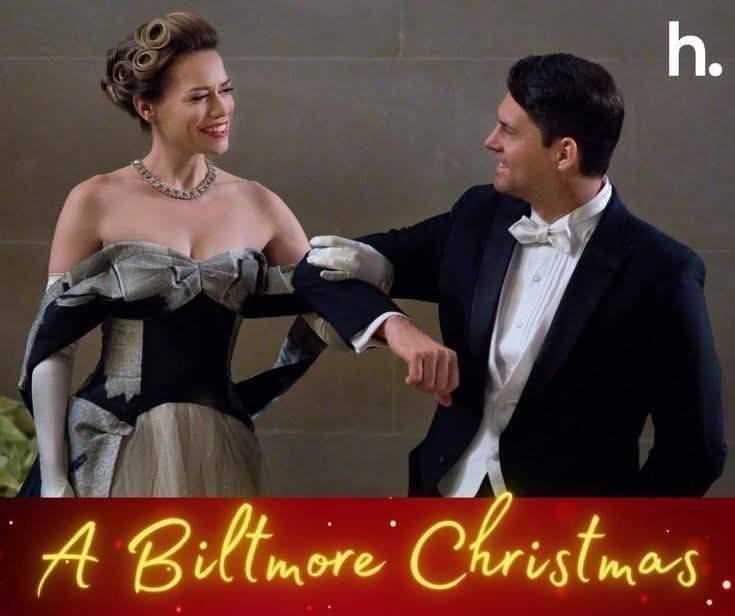
The grand architecture, decorated interiors, Christmas trees, period costumes, and old-fashioned atmosphere create the feeling that Lucy has genuinely crossed into another world. There is something almost storybook-like about seeing such a historic location transformed into a cinematic Christmas setting.
The film’s greatest strength may be the way it combines that visual beauty with nostalgia. Old Hollywood has always carried a particular kind of romantic appeal. The elegance of the costumes, the classic movie-star persona, the studio environment, and the idea of discovering a forgotten piece of cinematic history all fit naturally with Christmas storytelling.
But the movie ultimately isn’t about pretending the past was perfect.
It is about recognizing the emotional truths that survive across generations.
Love still matters. Hope still matters. Family still matters. Stories still matter. And Christmas still gives people a reason to believe that circumstances can change.
That is why A Biltmore Christmas works so well as a comfort watch. It gives viewers several different forms of escape at once. There is the fantasy of traveling through time. There is the romance of old Hollywood. There is the beauty of Biltmore Estate. There is the familiar emotional reassurance of a Christmas movie. And there is the simple pleasure of watching two appealing performers discover a connection that crosses decades.
For longtime Hallmark viewers, that combination can feel especially satisfying because it respects the traditions of the genre while adding a fresh idea. The movie doesn’t abandon the warmth, romance, and optimism audiences come for. It simply finds a different doorway into those feelings.
Perhaps that is why the movie has developed such a lasting place in holiday viewing conversations. It isn’t memorable only because it is pretty, romantic, or festive. It understands something important about Christmas movies: sometimes viewers aren’t looking for realism. They are looking for possibility.
They want to believe that an unexpected meeting can change someone’s life. That a forgotten story can be rediscovered. That the past can teach us something valuable. That love can arrive in the most surprising circumstances.
And sometimes, they simply want to spend a couple of hours somewhere beautiful, surrounded by Christmas lights, old-fashioned glamour, laughter, and a little bit of impossible magic.
A Biltmore Christmas delivers exactly that.
It is a holiday romance with a time-travel twist, but its real appeal is much simpler. It reminds viewers why stories like this continue to matter: because every Christmas, people return to familiar movies hoping to feel something they already know—and maybe discover something new along the way.
When Christmas opens the door to another time, sometimes the most surprising journey is the one that brings us back to what we value most.
