Part Three: Why This Story Continues to Stay With Hallmark Fans
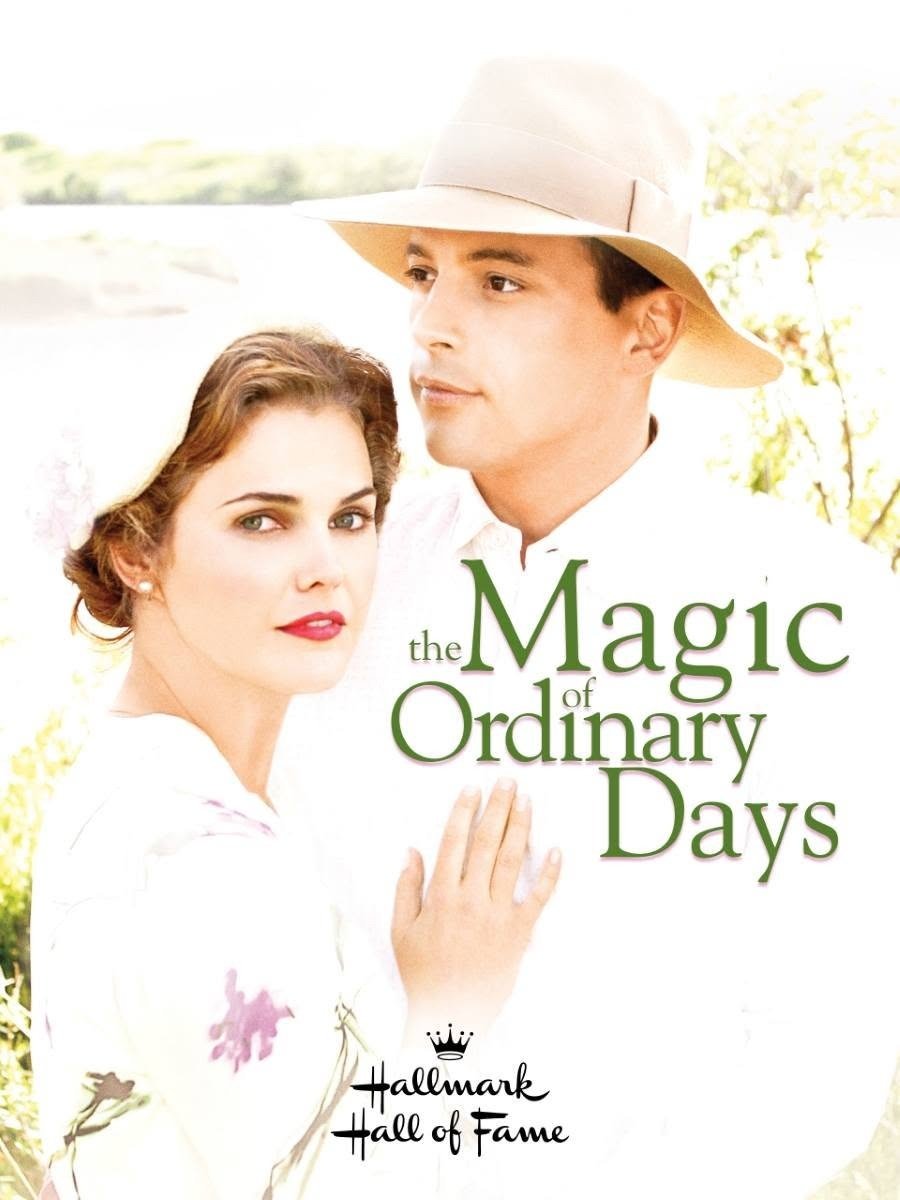
More than two decades after its original broadcast, The Magic of Ordinary Days remains one of those Hallmark productions that viewers remember for reasons that go beyond its romance. The film has a gentleness that distinguishes it from faster, more conventional love stories, and its emotional appeal comes from the feeling that its characters are genuinely changed by the people they meet.
The performances are a major part of that lasting appeal.
Keri Russell brings vulnerability to Livy without making her helpless. Her character has dreams, intelligence, frustration, and a strong sense of who she thought she was supposed to become. Russell allows viewers to see the uncertainty underneath Livy’s composure, making her eventual emotional awakening feel earned.
Ulrich’s Ray is almost the opposite. His quietness could have made him difficult to connect with, but Ulrich gives him a warmth that grows through understatement. Ray’s love is expressed more through behavior than speeches, which makes his eventual connection with Livy feel especially sincere.
Together, Russell and Ulrich create a chemistry based on gradual discovery. Their relationship is not about two people instantly recognizing destiny. It is about two people slowly realizing that the person they initially misunderstood may be the person who understands them best.
That is a powerful distinction.
The movie also carries a strong sense of nostalgia, although its emotional world is not simply sentimental. The World War II setting gives the story an atmosphere of uncertainty, separation, and sacrifice, while the rural setting creates a slower rhythm. The combination makes the film feel almost timeless.
Its central message is equally enduring: sometimes the life we planned is not the life we receive, but that does not mean the unexpected life cannot become meaningful.
That idea is particularly powerful because it does not require perfection.
Livy’s new life is not presented as a fairy tale where every difficult circumstance magically disappears. Instead, she discovers something more believable. Happiness can grow gradually. Love can begin in uncertainty. A family can become precious even when it was never part of the original plan.
The film’s official Hallmark description captures this emotional evolution by noting that Livy gradually realizes she may have found “home” almost accidentally. That idea is at the heart of why the movie continues to resonate.
For many viewers, the most moving romances are not necessarily the ones filled with grand declarations. They are the stories where someone quietly changes the way another person sees the world.
That is what Ray does for Livy.
And, in a different way, Livy does the same for Ray.
They challenge each other without needing to become identical. She brings curiosity and a wider view of the world. He offers steadiness, patience, and a sense of belonging. Their differences become less like obstacles and more like pieces of a life neither one could have imagined alone.
That may be the lasting magic of The Magic of Ordinary Days.
It reminds viewers that life-changing moments do not always look important when they happen. Sometimes they look like a conversation at the end of a long day. Sometimes they look like someone making an effort to understand you. Sometimes they look like a quiet house, a familiar landscape, a shared table, or the realization that the place you once wanted to escape has slowly become home.
And perhaps that is why this beautiful Hallmark Hall of Fame story continues to feel so special.
It does not promise that life will follow the plan.
It offers something more hopeful: the possibility that even when life takes an unexpected turn, there can still be love waiting in the ordinary days.
