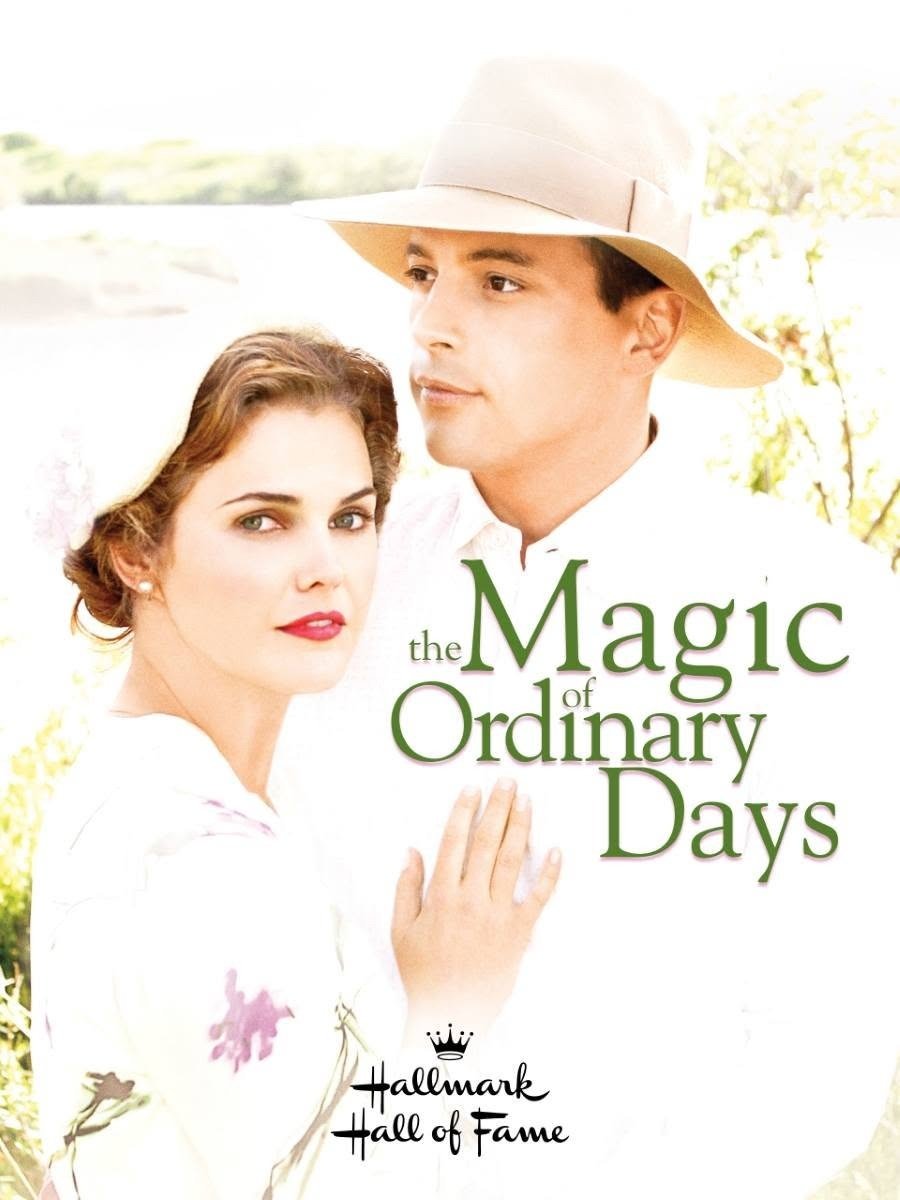
Part One: A Quiet Story That Still Feels Remarkably Powerful
Some movies announce their importance with grand gestures, sweeping declarations, and unforgettable twists. The Magic of Ordinary Days does something much quieter. It asks viewers to slow down and notice the small moments—the hesitant conversations, the shared meals, the kindness that arrives without being requested, and the gradual realization that a life can change without anyone planning for it to happen.
First broadcast on CBS in 2005 as a Hallmark Hall of Fame presentation, the film stars Keri Russell as Olivia “Livy” Dunne, Skeet Ulrich as Ray Singleton, and Mare Winningham as Martha. Set in 1944 during World War II, the story follows Livy, a young educated woman whose pregnancy leads her stern father to arrange a marriage with Ray, a farmer in rural Colorado.
That premise could easily have produced a simple romance built around a predictable transformation. Instead, the film takes its time. Livy does not immediately fall in love with Ray, and Ray does not expect her to suddenly become someone else. Their relationship develops through patience, disappointment, curiosity, and an increasingly meaningful understanding of one another.
That is one of the movie’s greatest strengths.
Livy arrives carrying dreams that seem much larger than the life waiting for her. She is educated, curious about the world, and interested in archaeology. Ray, by contrast, is deeply connected to his land, his family, and the responsibilities immediately in front of him. Hallmark’s own description emphasizes the contrast between Livy’s worldly ambitions and Ray’s practical, quiet nature.
Yet the film never suggests that one way of living is inherently better than the other. Instead, it gradually explores what happens when two people with completely different expectations begin to see the value in each other.
Keri Russell gives Livy an emotional complexity that makes her difficult circumstances feel personal rather than merely dramatic. She is not simply a woman waiting to be rescued by romance. She is someone struggling with disappointment, uncertainty, guilt, and the loss of the future she once imagined.
Skeet Ulrich’s Ray works beautifully against that energy. Ray is not defined by flashy speeches. His appeal comes from restraint. He listens. He works. He notices things. He makes an effort to understand the woman who has suddenly entered his life.
That contrast gives the romance its emotional credibility.
Rather than telling viewers that love happens instantly, The Magic of Ordinary Days suggests that love can sometimes grow from something much more difficult and much more meaningful: learning to truly see another person.
