Part Two: The Romance Works Because the Characters Feel Alive
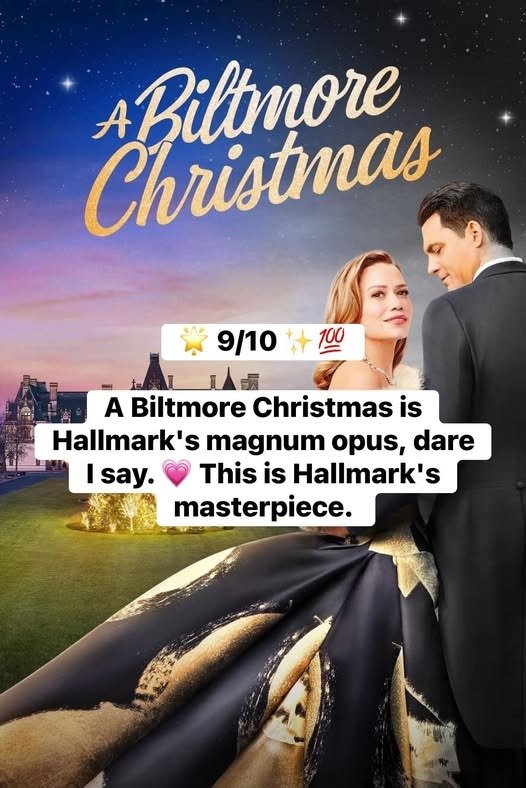
At the center of A Biltmore Christmas is the relationship between Lucy and Jack, and much of the movie’s success depends on whether that relationship feels believable. Thankfully, Bethany Joy Lenz and Kristoffer Polaha bring an easy charm to their scenes together.
Lenz gives Lucy enough independence and personality that she never feels like someone who exists only to fall in love. Lucy is a writer, a woman with her own creative instincts, and someone trying to figure out what kind of story she actually wants to tell. Her journey is therefore about more than romance. It is also about confidence, artistic honesty, and discovering what makes a story meaningful.
That gives the character emotional room to grow.
Polaha’s Jack, meanwhile, fits naturally into the old-Hollywood world surrounding him. There is a classic leading-man quality to the performance, but the character isn’t reduced to being simply charming or handsome. His connection with Lucy becomes one of the elements that allows the movie to explore the difference between the romantic stories people expect and the complicated emotions that exist underneath them.
Their chemistry is especially effective because the relationship isn’t rushed into existence simply because the movie needs a couple. Their conversations, playful exchanges, and growing curiosity about one another create the feeling that they are genuinely enjoying each other’s company.
That distinction is important in a Christmas romance.
The best holiday romances aren’t necessarily the ones with the biggest declarations. Often, they are the ones where two people simply seem happier when they are together. A look across a room, an unexpected laugh, a moment of understanding, or the realization that someone sees you differently can be more memorable than a grand speech.
Lenz and Polaha understand that rhythm. Their performances allow the romance to breathe, and the old-Hollywood setting gives their relationship an extra layer of fantasy. They aren’t simply two people falling in love. They are two people discovering what happens when the boundaries between a story and real life begin to blur.
That is also why the movie’s emotional themes reach beyond the romance.
A Biltmore Christmas is deeply interested in the idea that stories matter because people need them. Lucy’s struggle over how a Christmas story should end reflects a larger question: Should a story simply give audiences what they expect, or should it tell the emotional truth?
The movie ultimately leans toward hope, but it doesn’t treat hope as something shallow. Hope here means believing that people can change, that love can arrive unexpectedly, and that sometimes the ending we initially imagine isn’t necessarily the ending we need.
That message is particularly fitting for a Christmas movie.
Christmas stories have always been filled with second chances, reunions, forgiveness, family, and unexpected love. What makes this film distinctive is that it wraps those familiar themes inside a story about another story. The characters are surrounded by the machinery of filmmaking, yet the emotions remain remarkably human.
Even the movie’s supporting performances contribute to that sense of a larger world. Jonathan Frakes brings a recognizable presence as Winston, while the period characters help create the feeling that Lucy has truly stepped into a production from another era. Hallmark officially lists Frakes alongside Lenz and Polaha among the film’s principal cast.
The result is a movie that understands exactly what its audience came for: romance, warmth, beautiful Christmas imagery, and a happy emotional destination. But it adds just enough imagination to make the familiar feel fresh.
